
IPTV has long ceased to be simply “television over the internet.” Today, for users, it is a way to watch TV channels, movies, series, sports, TV archives, and video on demand on a TV, smartphone, tablet, or set-top box.
Over the next 5 years, the market will change even faster. IPTV will move closer to OTT services, there will be more free ad-supported channels, smart recommendations, cloud features, and subscription options. The main question for users is simple: will they need to upgrade their equipment, and what will it give them?
In short: not everyone needs to replace their TV or set-top box urgently. But for those who want 4K, HDR, a fast interface, multiscreen viewing, and modern apps, an upgrade may be useful.
Why the IPTV Market Will Continue to Grow
Analysts forecast steady growth for IPTV and video streaming. According to Fortune Business Insights, the global IPTV market may grow from $93.26 billion in 2025 to $330.19 billion by 2034. Grand View Research estimates the video streaming market at $129.26 billion in 2024 and forecasts growth to $416.8 billion by 2030.
The reason is clear: viewers increasingly do not want to depend on the traditional TV schedule. Users want to choose what to watch, when to watch it, and on which device.
IPTV and OTT Will Merge
Previously, IPTV was more often associated with a provider’s service: a set-top box, a package of TV channels, an archive, and sometimes a video library. OTT refers to online cinemas, streaming apps, and video services that work over the internet independently of an operator.
In the coming years, the boundary between them will become less noticeable. Users will expect TV channels, movies, series, archives, sports, free channels, and personal recommendations to be available in one interface.
That is why OTT and IPTV trends will develop together. A good IPTV service will resemble a unified content showcase: you turn on the TV and immediately see live TV, movies, continue watching, recommendations, and apps.
FAST Channels and Advertising Will Become More Visible
One of the main trends is FAST channels. These are free streaming TV channels with advertising. They resemble regular television: the channel runs on a schedule, and the user simply turns it on and watches. But this content is delivered over the internet.
The FAST market is growing quickly. According to Grand View Research, it reached $9.73 billion in 2024 and may grow to $40.20 billion by 2033.
For users, this means more free content: movies, series, news, sports, documentaries, children’s channels, music, and themed selections. The downside is also obvious: there will be more advertising.
Most likely, the market will move toward a mixed model. Some content will be available by subscription without ads, while some will be free but with ad breaks. That is why ad supported streaming will become an important part of IPTV.
Smart TV Will Reduce Dependence on Set-Top Boxes
The spread of Smart TV strongly affects IPTV. New TVs already have built-in apps, Wi-Fi, 4K, HDR, and voice search. Therefore, many users may not need a separate set-top box.
But there is a nuance. TVs last a long time, while software ages faster. After a few years, apps may start working incorrectly, updates may stop, and some services may no longer be supported.
In this situation, a set-top box remains useful. It can “update” an old TV without buying a new screen. Therefore, smart TV adoption will not eliminate set-top boxes, but will change their role. They will be needed by those who want a faster interface, new apps, support for 4K, HDR, modern codecs, Ethernet, or Wi-Fi 6.
Will You Need to Upgrade Your Equipment?
For most users, the answer is: not immediately and not necessarily. If you watch IPTV in HD or Full HD, the service works stably, channels switch quickly, the app does not freeze, and the image quality suits you, there is no urgent need to replace your equipment.
An upgrade is worth considering in the following cases:
- You want to watch 4K and HDR. This requires a TV with 4K/HDR support, a suitable plan, stable internet, and a device that supports this quality.
- Your old set-top box or Smart TV is slow. If the menu opens slowly, channels switch with delay, apps crash, and updates no longer arrive, a new set-top box will noticeably improve the experience.
- You want to watch IPTV on several devices. Multiscreen streaming is becoming the norm: a TV in the living room, a smartphone on the go, a tablet in the kitchen, and a second TV in the bedroom.
- You need new features: cloud archive, voice search, personal recommendations, modern OTT apps, and a more convenient interface.
What an Upgrade Will Give You
The main benefit for users is convenience. A modern device opens menus faster, switches channels faster, and launches apps more quickly. 4K, HDR, and new video codecs provide a sharper picture and better quality at a lower bitrate. New set-top boxes work better with Wi-Fi, more often support Ethernet, and play video more reliably.
The role of AI content recommendations will also grow. IPTV and OTT services will increasingly suggest movies, programs, and channels based on user habits. If recommendations are done well, they save time and help users find interesting content faster.
Another important direction is cloud based IPTV. Archives, profiles, settings, recommendations, and some functions will be stored on the service side. This will allow users to continue watching on another device and receive updates without complicated setup.
How Much It May Cost
Costs depend on the country, store, brand, and device specifications.
If you already have a good Smart TV and the IPTV app works properly, your costs may be zero.
A simple media player for Full HD or basic 4K usually costs from a few dozen dollars. More capable 4K devices with a good processor, decent memory, HDR, and stable Wi-Fi often cost around $50 to $120. Advanced models with Ethernet, Wi-Fi 6, Dolby Vision, Dolby Atmos, and high performance may cost from $100 to $200 or more.
Sometimes it is better to upgrade not the set-top box, but the router. If video freezes because of weak Wi-Fi, a new router may bring more benefit.
For 4K streaming, stable internet of roughly 15–25 Mbps per stream is usually needed. If several people at home watch video at the same time, extra speed headroom is required.
Which Technologies Will Change IPTV
In the coming years, users will encounter several key changes more often.
First, cloud IPTV. More functions will work through servers: archives, profiles, recommendations, interface updates, and content management.
Second, IPTV middleware. For the user, this is an invisible layer, but it is responsible for the interface, authorization, channel list, archive, video on demand, profiles, and service operation across different devices.
Third, OTT platforms. IPTV operators will add more OTT logic: apps, flexible subscriptions, viewing outside the home, personal profiles, and access from different screens.
Fourth, new video codecs. H.265/HEVC, AV1, and next-generation codecs allow better-quality video to be delivered with less internet load. But older devices may not support them at the hardware level.
Fifth, IPTV monetization. Services will earn not only from subscriptions, but also from advertising, FAST channels, premium packages, movie rentals, and partner offers.
What Will Happen to Prices and Plans
Most likely, IPTV will not arrive at one universal price. There will be several models.
Basic packages will remain relatively affordable, especially if they include advertising. Premium packages with sports, movies, 4K, archives, and multiple devices will cost more.
Free FAST channels will help users watch more content without a subscription, but with advertising. Hybrid plans will also become more important: a basic package, sports, video library, additional devices, ad removal, or premium channels for an extra fee.
Forecast for the Next 5 Years
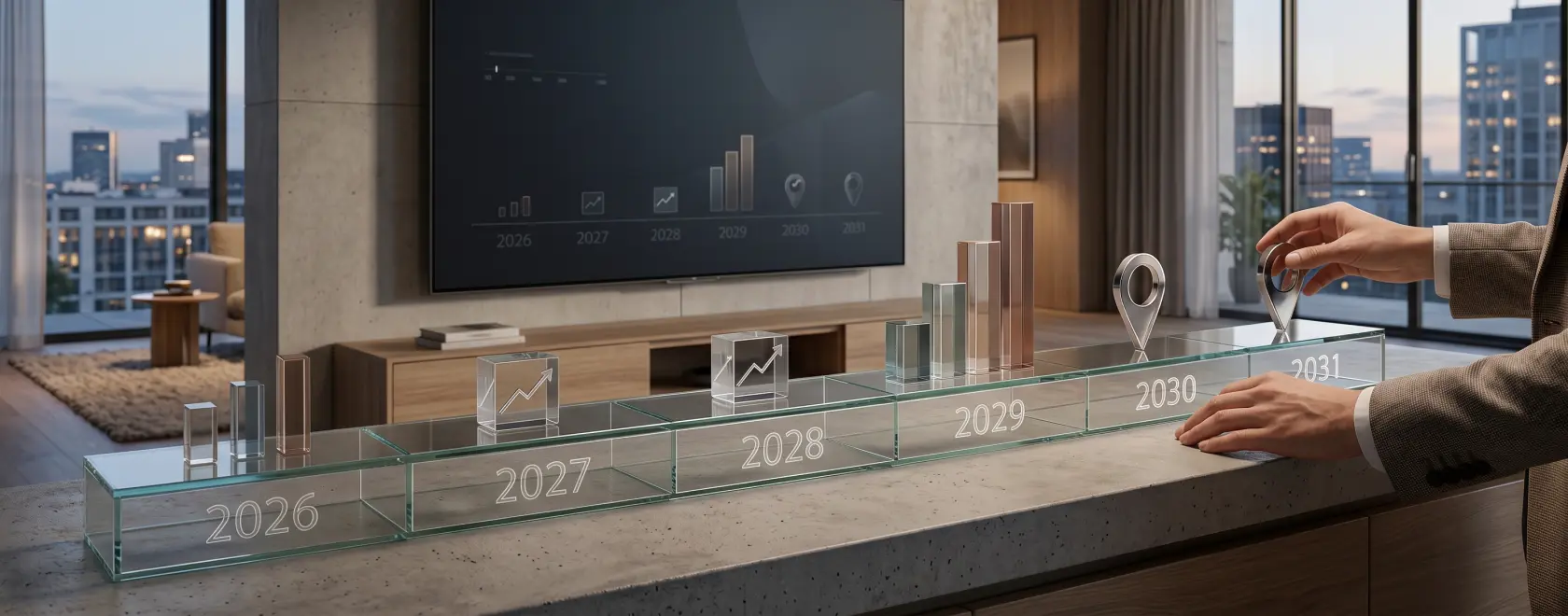
By 2030, IPTV will become more flexible, personalized, and closely connected with OTT. IPTV market trends 2030 will be shaped not only by the number of channels, but also by service convenience.
The main changes:
- IPTV and OTT will more often merge into one interface
- There will be more FAST channels
- Advertising will become an important part of free content
- 4K and HDR will become more widespread, but will not be mandatory for everyone
- Smart TV will continue to grow, but demand for set-top boxes will remain
- AI recommendations will become a standard feature
- Cloud platforms will simplify archives, profiles, and multiscreen viewing
- Older devices will gradually lose support for new apps and codecs
Bottom Line: Should You Prepare to Replace Your Equipment?
If your IPTV works stably, channels switch quickly, the app does not freeze, and you are satisfied with the image quality, you do not need to replace your equipment right now.
But if you want 4K, HDR, a fast interface, modern apps, multiscreen viewing, stable Wi-Fi, a cloud archive, and smart recommendations, upgrading your set-top box or Smart TV may be justified.
Over the next 5 years, IPTV will develop not just as television, but as a full-fledged video platform. Users will benefit from convenience, quality, content choice, and flexible pricing. The main risk is more subscriptions and more advertising. Therefore, the best approach is simple: do not upgrade equipment in advance, but do it when the old device genuinely interferes with comfortable viewing.
This is the practical IPTV market forecast: the future of IPTV will be defined by convenience, personalization, and flexibility. Broader IPTV industry trends, the future of IPTV and OTT, and the overall future of video streaming all point toward next generation IPTV services built around cloud platforms, AI, multiple screens, and hybrid monetization models. From a user’s perspective, the most important IPTV industry forecast is not just market growth, but a better everyday viewing experience. These IPTV business trends will shape how services compete and how viewers choose their devices, plans, and content.
